
Shared reservation flow
Apply consistent rental processes while keeping pickup, return, availability, and local responsibility visible.
Standardize reservations, fleet, rates, dispatch and reporting across locations while keeping local responsibilities clear.
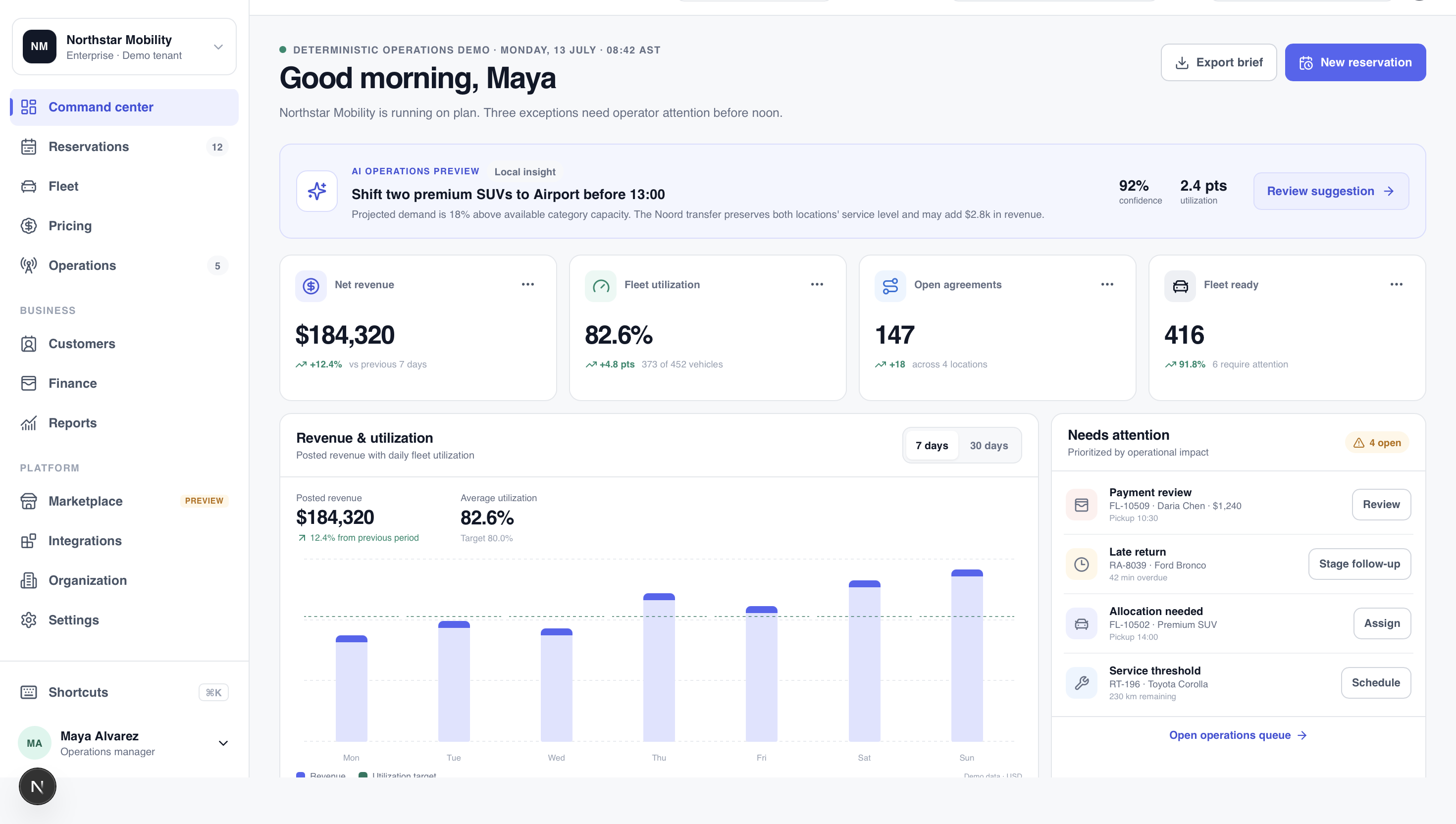
Growing rental companies, regional groups, enterprise operators, and franchise organizations coordinating more than one operating location.
Operating-model fitLocation, brand, tenant, permission, transfer, reporting, integration, and rollout requirements are confirmed during discovery.
Software to manage multiple car rental locations must support shared standards, location-level work, cross-location movement, and a reliable network view at the same time.
Apply consistent rental processes while keeping pickup, return, availability, and local responsibility visible.
See current vehicle and class capacity by location, with transfers and readiness connected to demand.
Keep one-way rentals, transfers, dispatch, and exceptions accountable across station boundaries.
Align users and permissions to the organization, brand, location, team, and responsibilities they support.
Move from network-level direction to the locations, vehicles, rentals, and tasks behind a change in performance.
Use a common implementation method while accounting for local data, workflows, training, and readiness.
Multi-branch car rental software creates value when network decisions and station work update each other continuously.
Define approved roles, rules, statuses, data ownership, and measures that should remain consistent.
Map each location’s fleet, demand, staffing, partners, permissions, and operational differences.
Connect reservations, transfers, tasks, availability, and exceptions across location boundaries.
Use location and network reporting to identify capacity, process, and rollout priorities.
Shared data does not require every user to see or manage the full organization.
Work from the reservations, vehicles, tasks, users, and exceptions relevant to the location.
See where demand, capacity, transfers, workload, or process variation needs attention.
Review the network through shared measures while preserving brand, tenant, and location accountability.
LAREVONT combines multi-location workflows with an API-first, multi-tenant platform foundation and structured rollout approach.
Independent organizations and brands can be mapped to an agreed platform structure with clear data boundaries.
Roles, permissions, authentication, and auditable administrative activity support consistent control.
Finance, payments, distribution, identity, fleet, and partner systems are scoped by workflow and ownership.
Implementation can sequence data, training, integrations, and location readiness without promising a universal timeline.
Multi-location car rental software connects reservations, fleet, rates, dispatch, users, and reporting across an operating network while keeping location-level work and accountability visible. It should support shared standards without treating every station as identical.
LAREVONT can align access and configuration to the approved organization, brand, location, team, and role structure. The exact degree of shared and local configuration is confirmed during discovery.
Vehicle movements and location responsibilities can remain connected to the reservation, fleet, dispatch, and task workflow. Transfer rules, ownership, and exceptions are configured around the operator’s process.
LAREVONT starts with operating-model, data, integration, role, training, and readiness discovery. Rollout sequence and risk controls are then shaped around actual location complexity; no fixed timeline is assumed before that work.
Bring your network structure, transfer flows, permission model, systems, and rollout priorities to an operating-model demonstration.